
So… What is Ramen, Really?
Whenever you talk about ramen, you inevitably run into one big wall: personal preference.
Broth type, richness, noodle thickness, toppings—everyone has their own set of must-haves, and yes, debates can get veryheated.
Some even go as far as to say, “Ramen is a way of life.” A little intense, don’t you think? (lol)
As for me, I proudly call myself a ramen otaku.
I’ve got the skills and tools to make it all from scratch—noodles, soup, tare, toppings—you name it.
I’m especially fond of my Ono-shiki noodle press.
Plus, I grew up in Kanagawa on a steady diet of iekei ramen (“Porky fat boys are my people!” ♪), and even worked part-time at a ramen shop during my student days.
So… I think I’ve earned the right to push my ramen opinions a little. Just a little. (lol)
Now, let me introduce a ramen shop in Furano that I’ve been going to for over ten years. Yes, now, after all this time.
Shinatora: The Famous Furano Ramen Spot That Needs No Introduction
“Shinatora” is a name known not only in Furano, but all across Japan.
Google it and you’ll find it near the top. It regularly shows up on social media, too. It’s that popular.
The first time I tried it was about 15 years ago.
I ordered their signature bowl, the Shina Soba, and… was completely overwhelmed.
The fishiness hit me like a truck—I honestly thought, “Ugh, I can’t eat this!” (lol)
At the time, fish-based broths weren’t that common, and I just wasn’t used to it.
But then, years later, a friend dragged me back there.
And guess what? I totally fell in love with it. Hooked. Addicted.
Yeah… it got me good. 🤣
The appeal of “Shinatora” making the most of local ingredientsOne of Shinatora’s strengths is how they use local ingredients.
It’s not just that they’re tasty—that’s a given. What’s impressive is how naturally they incorporate them, without flashy gimmicks or signs boasting “local this” or “farm-to-table that.”
They just use what they truly believe in, and that quiet confidence screams craftsmanship.
(Though sometimes I do worry about whether their cost margins are okay… ^^;)
The ramen here is always evolving, too.
From soup prep and noodle improvements to topping tweaks, they never stop refining.
As someone in a totally different industry, I still find that mindset inspiring.
Shinatora ramen, overall, is rich in fat and bold in umami.
They use a custom-made straight noodle made with aromatic wheat flour—it pairs beautifully with their broths.
Here’s what I think is the main lineup (this is 100% my take):
・Tantanmen: Rich sesame flavor with a spicy punch
・Shina Soba: Deep, rich flavor with saba-bushi (mackerel flakes)
・Koge Shio: Thick, garlicky flavor with burnt garlic oil
・Niboshi Ramen: A lighter choice, great for those who prefer subtlety

A Bowl with Punch
Let me say it again—Shinatora ramen is bold, fatty, and full of character.
The noodles are aromatic, straight-cut, and designed to soak up flavor.
My favorite topping? Their chicken oil-fried seasonal vegetables.
Packed with Furano veggies and visually reminiscent of a soup curry, it’s a topping like no other.
Personally, I always order mine usumi (light flavor), and yes—I drink every last drop of the soup.
This ramen is more than just a meal. It’s fuel for my soul and body.

In Conclusion
To me, Shinatora serves the best ramen in Furano. But hey, ramen’s a matter of taste.
Still, I’ll say this—Furano has real ramen potential, with lots of tasty spots scattered around.
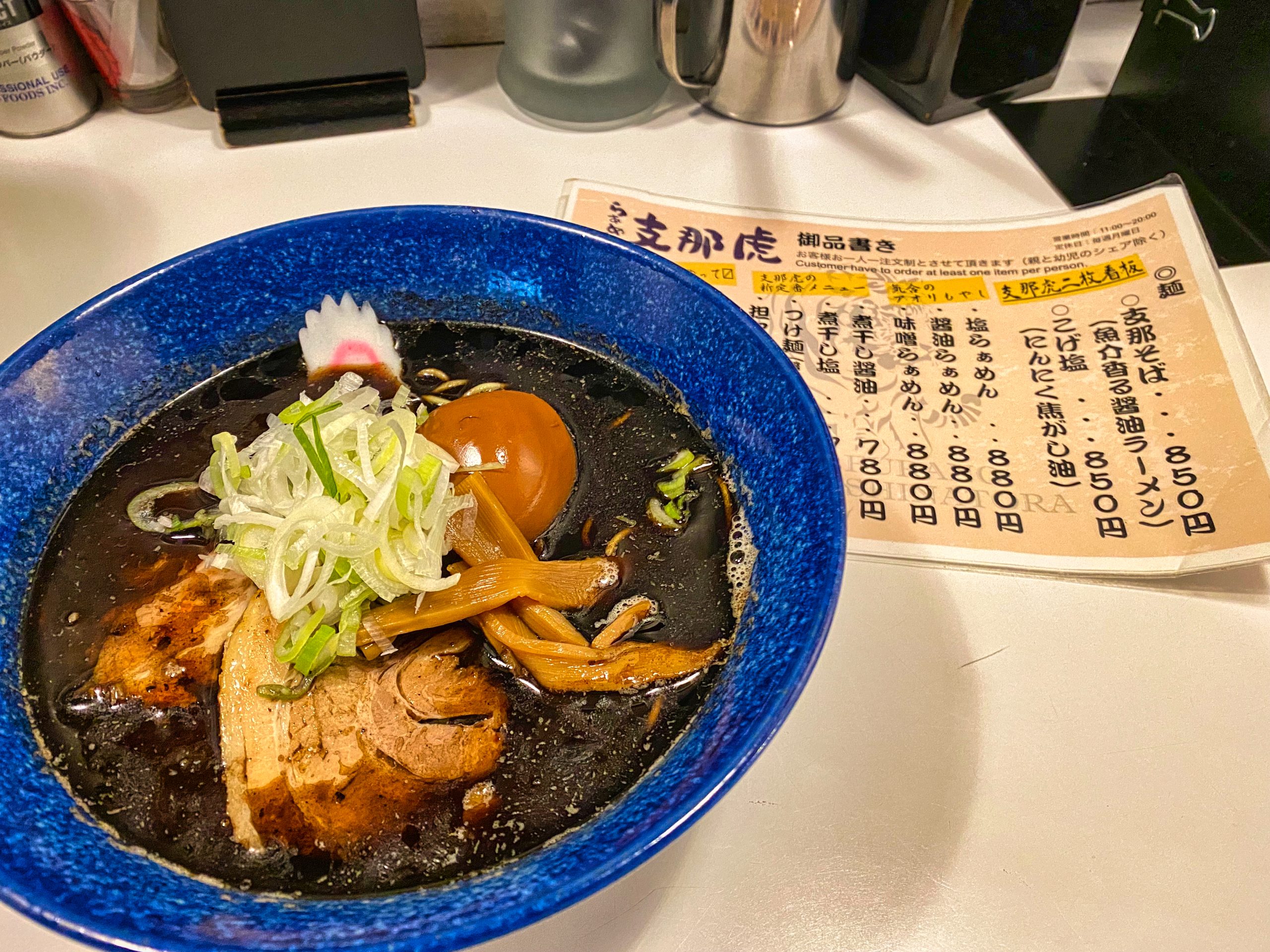

If you’re craving a bold, satisfying bowl, don’t miss Shinatora.
And if you’ve just finished a long bike ride, I guarantee it’ll be the perfect post-ride meal. (Fight me if you disagree! lol)
The best ramen I’ve ever had was after a 300km cycling trip…
Just don’t expect the kakuni (braised pork belly) topping from the photo—they’ve since taken it off the menu. 😅


